
Procurement teams are signing AI vendor contracts without knowing what to ask, and the gaps that creates can surface as compliance failures, data incidents, or operational surprises months later.

Procurement teams are signing AI vendor contracts without knowing what to ask, and the gaps that creates can surface as compliance failures, data incidents, or operational surprises months later.

Procurement teams are signing AI vendor contracts without knowing what to ask, and the gaps that creates can surface as compliance failures, data incidents, or operational surprises months later.

Procurement teams are signing AI vendor contracts without knowing what to ask, and the gaps that creates can surface as compliance failures, data incidents, or operational surprises months later.

Procurement teams are signing AI vendor contracts without knowing what to ask, and the gaps that creates can surface as compliance failures, data incidents, or operational surprises months later.

Procurement teams are signing AI vendor contracts without knowing what to ask, and the gaps that creates can surface as compliance failures, data incidents, or operational surprises months later.

The UK has chosen a different path to the EU on AI regulation, but that does not mean organisations can afford to wait and see.

AI sovereignty has moved from academic and policy discussions into practical governance conversations with unusual speed. It appears in procurement requirements, regulatory guidance, and board-level AI risk discussions with increasing frequency. Like most terms that achieve rapid adoption, it gets used to mean several related but distinct things, and that ambiguity creates confusion when organisations […]

Public AI vs private AI has become a standard feature of governance conversations, and it is a useful distinction when understood correctly. The problem is that many organisations apply it in ways that are either too simple to be accurate, or rest on assumptions about what “private AI” means that do not survive scrutiny. Getting […]

For organisations at the early stages of AI governance, policies and approved tool lists are the right starting point. They establish the framework, set expectations, and create the basic structure governance requires. For many organisations at this stage, that is enough. As AI adoption scales – more tools in use, more workflows incorporating AI, more […]
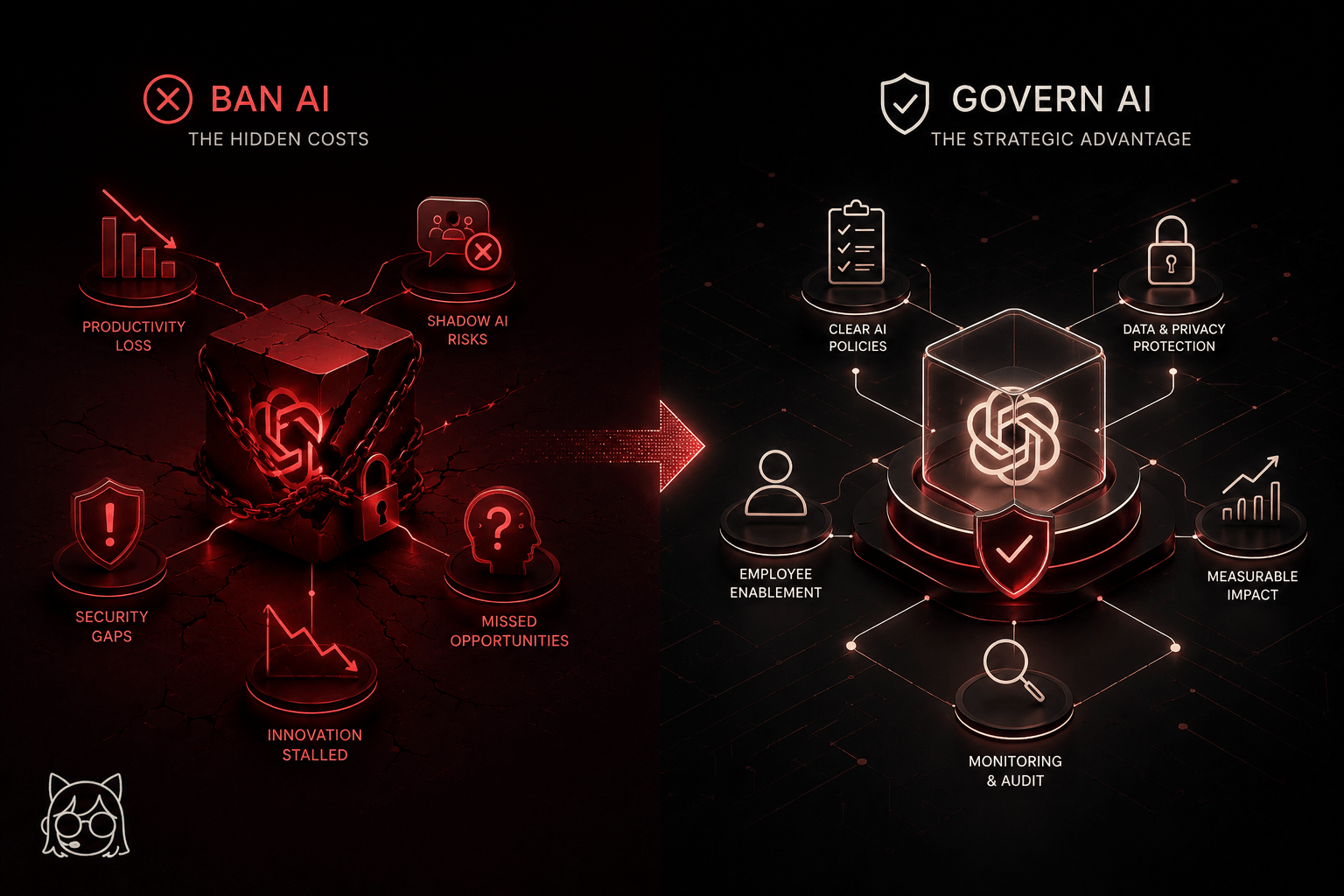
Banning ChatGPT is one of the most common first responses when AI governance concerns reach board or leadership level. Block it at the network level. Prohibit consumer AI platforms. Issue a policy statement that staff should not use AI tools for work until further notice. It feels like a decisive governance response. In practice, it […]


