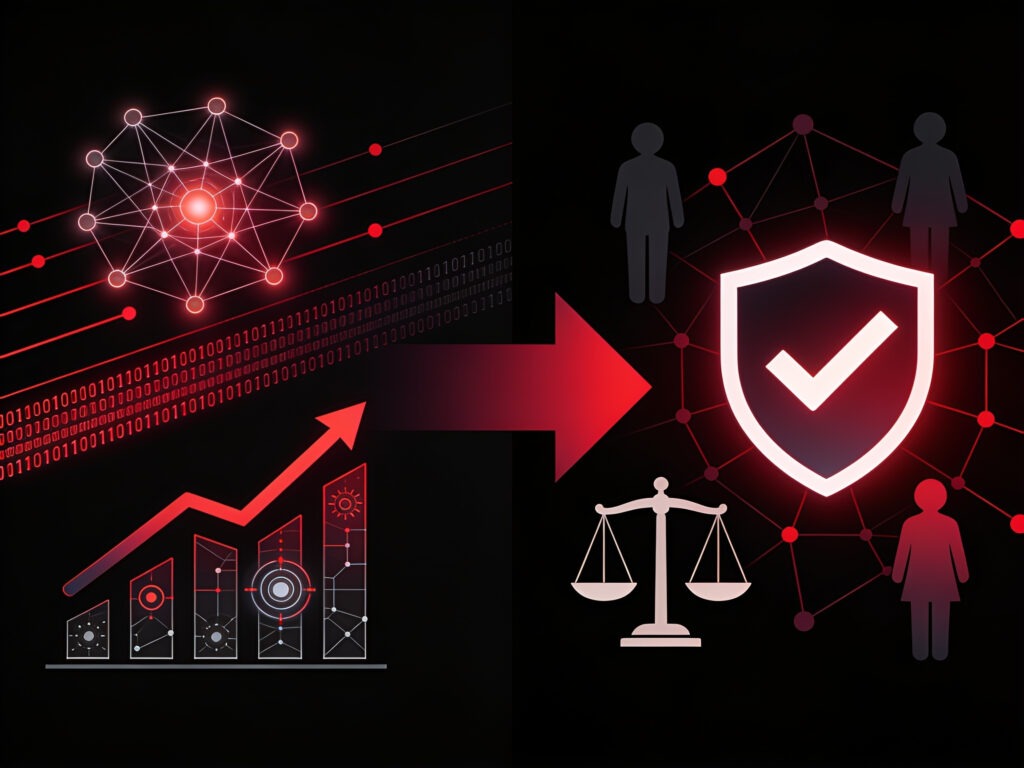
The first wave of organisational AI adoption was mainly about capability. What can these tools do? How much time can they save? Which processes can they improve? The question driving most AI investment was whether the technology worked well enough to be useful.
That question has largely been answered. For a wide range of business applications, AI tools work well enough to justify adoption. The productivity gains are real, the capability improvements are genuine, and the argument for using AI has been won in most organisations.
The second question, the one now arriving and the one that will define the next phase of AI adoption, is different. It is not about capability. It is about trustworthy AI. Can we demonstrate that our AI usage is safe? Can we show customers and regulators that it is governed? Can we scale adoption without creating exposure that undermines everything else?
Why trustworthy AI is becoming the constraint
The shift from capability to trust as the defining question comes from several pressures that are increasing rather than stabilising.
Customer expectations are rising. Enterprise buyers are starting to include AI governance requirements in procurement. Consumers are becoming more aware of how their data is used by AI systems. The implicit contract between organisations and the people they serve is being renegotiated to include AI usage, and organisations that cannot demonstrate responsible governance are finding it affects their commercial relationships.
Regulatory attention is increasing too. The ICO, the FCA, sector regulators across healthcare and professional services, and the broader EU regulatory framework through the AI Act are all moving toward more specific expectations around AI governance and accountability. The direction of travel is toward more scrutiny, not less, and organisations that have built governance infrastructure in advance will be considerably better positioned than those building it reactively.
Reputational risk is real and asymmetric. AI-related incidents – data exposed through an unsanctioned tool, a discriminatory output reaching a customer, a fabricated result relied upon in a consequential decision – attract disproportionate attention relative to their technical severity. The reputational cost of being seen to use AI carelessly is high, and the reputational benefit of being seen to use it responsibly is growing.
The competitive dimension of trustworthy AI
Trust in AI usage is becoming a competitive differentiator in ways that were not true twelve months ago.
In sectors where AI governance requirements are appearing in procurement, organisations that can demonstrate mature governance are winning business that those without it are losing. Not on price or capability, but on trustworthiness. The ability to answer governance questions specifically and with evidence is becoming a qualification criterion rather than a differentiating bonus.
There is also a compounding advantage to building governance early. Organisations investing in genuine AI governance now are accumulating the records, processes, and institutional knowledge that make governance increasingly easier to demonstrate over time. Those deferring governance are accumulating the technical debt and operational exposure that makes it increasingly urgent and costly to address – the same dynamic covered in why AI governance drifts over time.
The organisations that will scale AI most effectively are not necessarily those with the most sophisticated AI capabilities. They are the ones that have built the governance infrastructure to adopt AI broadly, rapidly, and safely, without the slowdowns that come from governance gaps surfacing at inconvenient moments.
What the trustworthy AI question requires
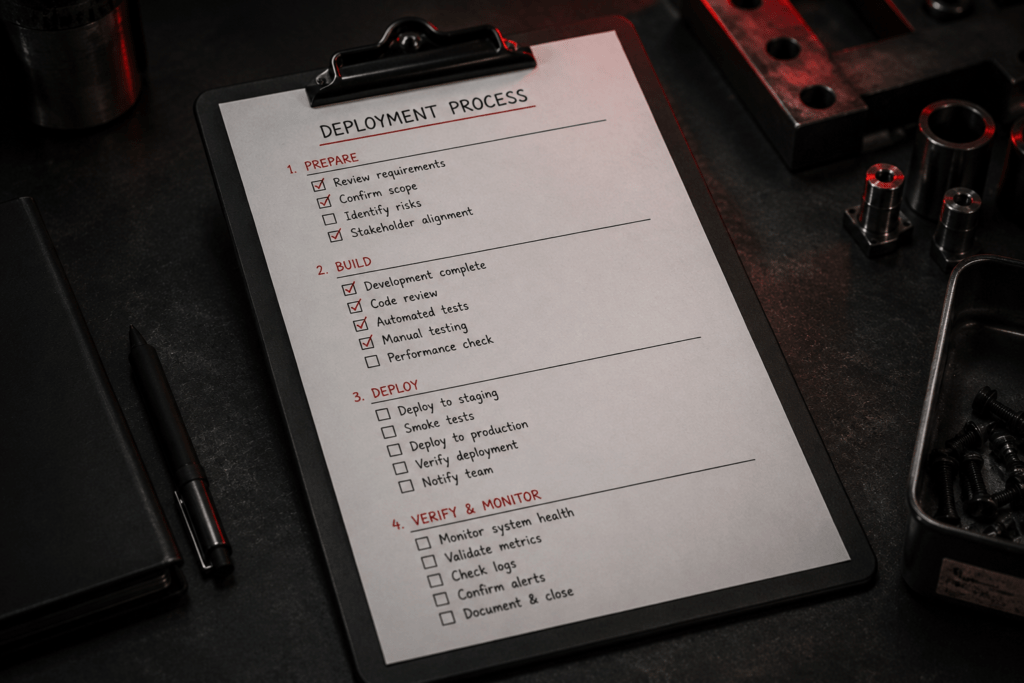
Answering the trust question requires more than good intentions. It requires the governance infrastructure that makes trust demonstrable.
That means genuine visibility of AI usage – an accurate, current inventory reflecting what is actually in use rather than what was formally approved. It means supplier governance that ensures third-party data handling arrangements are understood, adequate, and current. It means accountability structures that are operational rather than notional, with named individuals actively exercising governance responsibilities rather than holding theoretical ones. And it means policies and processes that reflect how people actually work, not how governance documentation assumes they work – the gap covered in the difference between AI governance and AI compliance.
It also means independent oversight. The organisations most trusted by external audiences are those that have subjected their governance to independent review and can offer evidence of that review rather than self-assertion. The analogy with financial audit is not exact, but the principle is the same: independent validation provides a quality of assurance self-certification cannot, as covered in how to assess your organisation’s AI governance maturity.
The window that exists now
There is a window of competitive advantage available to organisations that build genuine AI governance now, and it will not stay open indefinitely. As regulatory requirements become more specific and customer expectations more formalised, AI governance will shift from a differentiator to a baseline requirement. Organisations that have already built it will be ahead. Those building it in response to specific external pressure will be catching up.
The investment required to build governance that is genuinely operational is not trivial. But it is considerably smaller than the cost of addressing governance failure after an incident, under regulatory scrutiny, or when a significant commercial relationship is at stake because the answer to a procurement question is inadequate.
The organisations that will look back on this period and feel they made the right call are the ones that treated trust as a strategic priority rather than a compliance obligation, and invested in the governance that makes trustworthy AI real.
Black Chili helps UK organisations build the AI governance that makes trust demonstrable. Find out more about the full range of AI Assurance services.
If you are not sure what AI tools are in use inside your organisation, an AI Exposure Review gives you a clear, independent picture - what is being used, what data it touches, and where the real risks are.