Secure AI adoption is not about being the most restrictive organisation. It is about being the most organised one.
AI governance is often treated mainly as risk management. What could go wrong? What should we stop? What needs controlling? That framing is understandable. But it tends to produce governance that staff experience as friction, something to work around rather than something that helps.
In practice, secure AI adoption and productivity are not in tension. Good governance makes adoption faster, not slower. It removes the uncertainty that causes hesitation. When staff know what is approved, what is not, and how to get something assessed quickly, they spend less time second-guessing and more time using the tools available to them.
Why heavy-handed approaches fail secure AI adoption
Blocking AI tools at the network level feels like the safe option. So does banning most use cases, or building lengthy approval processes. Given the genuine uncertainty around AI risk, that instinct makes sense. Even so, it consistently produces the wrong outcome.
Staff who lose access to useful tools do not stop wanting them. Instead, they switch to personal devices, personal accounts, and home networks. The organisation loses visibility exactly when it needs it most. What results is a smaller official AI footprint and a larger, completely ungoverned one – the same pattern behind most shadow AI risk.
Heavy restriction also sends a message about culture. Staff can read it as a lack of trust in their judgement. They can also read it as a sign that the organisation cares more about avoiding liability than helping them do their jobs. And it tends to create a two-tier system: some people work around the restrictions, while everyone else is simply blocked.
The operational model behind secure AI adoption
Secure AI adoption needs a model that enables safe use, not just one that prevents unsafe use. In practice, the distinction is mostly about emphasis. Both need the same underlying controls.
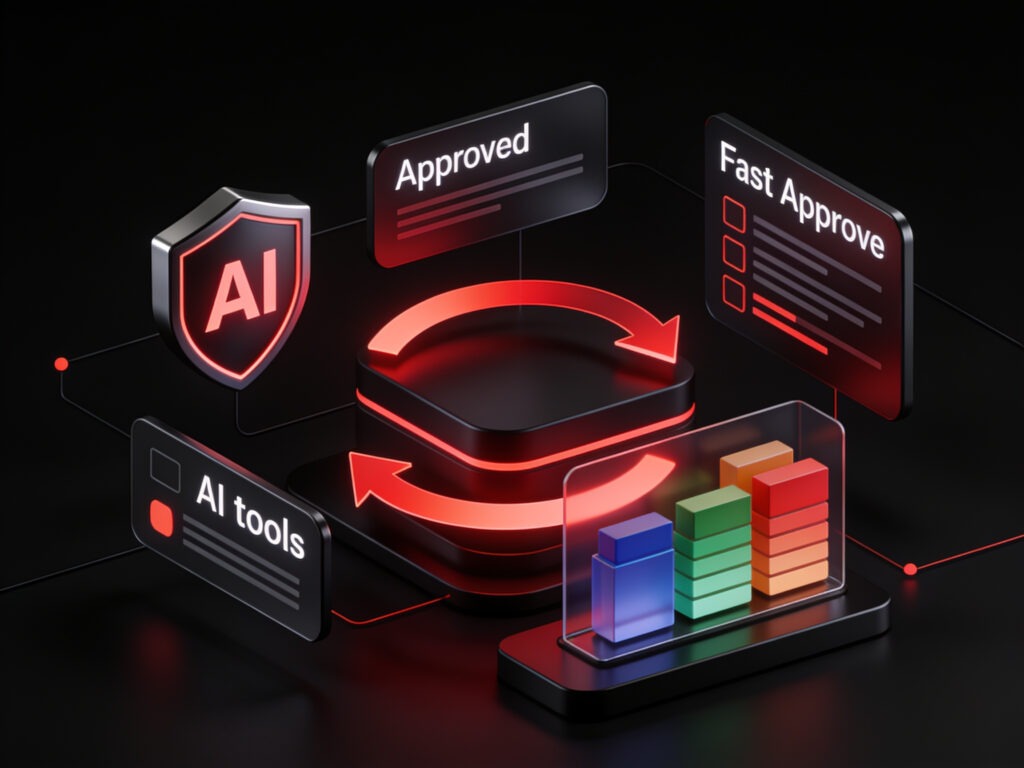
The foundation is a clear, current inventory of approved tools, with enough detail that staff can make confident decisions. A static list that was accurate when written and never touched since will not do this. Instead, the inventory needs to stay live, reflecting current approvals, current restrictions, and the reasoning behind both.
Alongside the inventory sits a fast, proportionate approval process for anything not yet on the list. A staff member who finds something useful should have a route to get it assessed in days, not weeks. The process needs to be credible – genuine assessment, not a rubber stamp or a default no – while staying light enough that people actually use it.
Data classification is the third piece. Staff need to know which categories of information can go into which types of AI system. This does not need to be complicated. Most organisations only need a clear three or four tier system – broadly public, internal, sensitive, restricted – with guidance on which tier each tool can handle. The aim is a rule a staff member can apply in real time, without escalating.
Making governance visible and usable
One of the most common failures in AI governance is that the policies and processes live in documents nobody reads. A framework that sits in a SharePoint folder, mentioned once in an induction pack, is not operational governance.
Making governance usable means putting it where decisions get made. For example, a short summary of AI usage rules inside the tools staff use every day – the intranet, the project management platform, the communications tool – is worth more than a long policy document nobody opens. Regular updates on what is approved, what has changed, and why, keep staff aware.
It also means making the right choice the easy choice. If the approved tools are good enough for most tasks, staff will use them without extra steps. On the other hand, if those tools fall short and the approval process for alternatives is slow, staff will make their own pragmatic decisions and bypass governance entirely.
Why secure AI adoption needs ongoing oversight
Secure AI adoption is not a one-off achievement. Tools change. Staff workflows evolve. Suppliers update their terms, and new use cases appear. A governance model that worked six months ago may already have real gaps.
This is why ongoing oversight matters as much as the initial framework. An organisation that builds good governance and then leaves it alone will see the gap between documentation and reality grow steadily. Governance drift is the norm rather than the exception. The only way to prevent it is to build review and monitoring in from the start. The NCSC’s guidance on AI and cyber security makes a similar point – AI governance is a continuing responsibility, not a one-off project.
Ultimately, the organisations that sustain secure AI adoption treat governance as an operational programme rather than a project with an end date. Regular review of what is in use, what has changed, whether controls are working, and what new risks have emerged is not bureaucracy. It is the maintenance that keeps governance functioning.
Black Chili’s AI Governance and Guardrails Design service builds the operational framework your organisation needs to adopt AI safely without blocking the productivity benefits.
If you are not sure what AI tools are in use inside your organisation, an AI Exposure Review gives you a clear, independent picture - what is being used, what data it touches, and where the real risks are.