AI governance in the UK public sector is a core accountability question for anyone running services that citizens rely on, not a side project for the innovation team. Councils, NHS trusts, police forces, and central departments are all under pressure to use AI to cut costs and speed up services. But public bodies answer to a higher standard than a private company ever will, and getting the governance wrong has consequences that go well beyond reputational damage.
Unlike a private business, a public sector organisation can’t quietly retire a failed AI project and move on. Every decision is potentially subject to Freedom of Information requests, judicial review, and public scrutiny. That changes the calculation entirely.
Why Procurement Rules Change the Risk Picture
Public procurement isn’t just slower than private sector buying, it’s structurally different. Contracts above certain thresholds must go through competitive tendering, and suppliers need to demonstrate compliance with public sector standards before they’re even shortlisted. That sounds like protection, and it partly is. But it also means AI vendors sometimes get selected on price and functionality without anyone properly interrogating what the tool actually does with data.
The problem is that procurement teams are rarely the same people who understand AI risk. A tool can sail through a tender process on cost grounds while nobody asks where the model was trained, what happens to citizen data, or whether the vendor can explain a decision if challenged. This is exactly the gap explored in the hidden supplier risks in enterprise AI, and it applies with extra force in public procurement, where switching suppliers later is far harder than in the private sector.
GDPR and the Added Weight of Public Sector Data
Public bodies hold some of the most sensitive personal data that exists, benefits records, health information, criminal justice data, school records. UK GDPR applies to all of it, but the public sector faces additional scrutiny because the volume and sensitivity of the data is so high.
The ICO has published specific guidance on AI and data protection that public bodies should treat as a baseline, not a ceiling. It covers how to run data protection impact assessments properly, how to handle automated decision-making, and what “meaningful human involvement” actually needs to look like in practice. Worth reading directly at the ICO’s guidance on AI and data protection rather than relying on a summary from a vendor with an obvious interest in getting the tool approved quickly.
Freedom of Information and the Transparency Problem
This is where public sector AI governance genuinely diverges from anything a private company deals with. If your organisation uses an AI system to help decide who gets a service, who gets flagged for a fraud check, or how a case gets prioritised, that system can become the subject of an FOI request. Someone can ask how it works, what data trained it, and why it produced a particular outcome for them.
If nobody in the organisation can answer that question, you have a governance failure waiting to surface in the worst possible way, usually via a journalist or a judicial review claim rather than an internal audit.
Algorithmic transparency here is a legal and reputational necessity, not a nice-to-have. Any AI system used in a decision-making capacity needs documentation good enough to survive public scrutiny, not just internal sign-off.
Algorithmic Transparency and Explainability Expectations
Government has been pushing algorithmic transparency standards for a while now, and the direction of travel is clear. Public bodies are increasingly expected to publish information about the AI systems they use, particularly where those systems affect decisions about individuals. That means knowing, in plain language, what the tool does, what data it uses, and what safeguards exist if it gets something wrong.
Many organisations discover during an audit that nobody wrote this down when the tool was first deployed. Retrofitting explainability after the fact is possible, but it’s far more painful than building it in from day one.
What Governance Actually Needs to Look Like
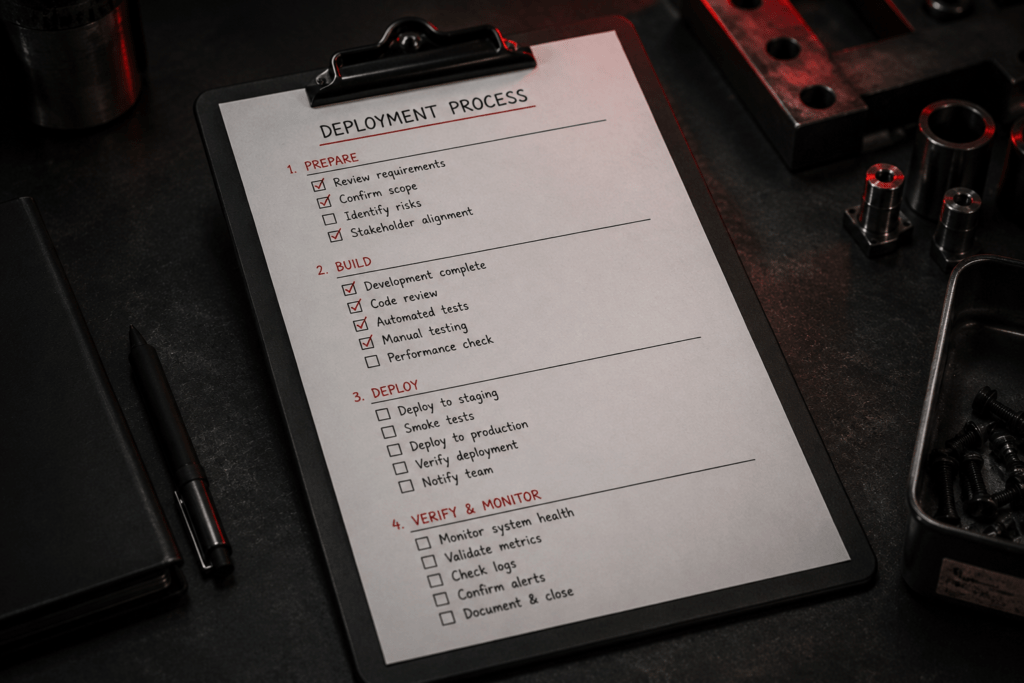
Public sector bodies need governance structures that assign clear ownership, set out what AI use cases are acceptable, and build in review points before and after deployment, not a one-off compliance exercise. That’s the thinking behind AI Governance and Guardrails Design, which gives organisations a structured way to define boundaries rather than discovering them after something goes wrong.
Leadership also needs to ask better questions, not just sign off on what’s presented to them. Our piece on AI governance for boards: what leadership should be asking sets out the questions that senior public sector leaders should be putting to their teams before any AI tool goes live, not after.
Building Governance That Survives Scrutiny
The public sector doesn’t get the luxury of moving fast and fixing things later. Every AI decision needs to survive an FOI request, a judicial review, or a select committee question, sometimes years after the tool was first deployed. Governance built for that level of scrutiny looks different to a private sector policy document, and it needs to be treated that way from the outset.
If your organisation needs a structured way to build AI governance that holds up to public sector scrutiny, AI Governance and Guardrails Design is the place to start.